WORDS BYGeneral Rajan Ravindran
As I look back on my career in the Army, a life spent in the company of soldiers who shaped me, within the brotherhood of brave individuals and platoons and battalions that protect our sacred borders, I feel a deep sense of humility and gratitude. The Indian Armed Forces (and I include the Navy, Air Force, and the different supporting corps) is a magnificent thing. Yes, there is intense patriotism in our service, a fearlessness born of duty, but there is also compassion, empathy, and sacrifice in equal measure. This is a family, and its members are the sentinels of this proud and ancient land.
Every soldier carries in his mind's eye a mosaic of moments that shaped not just his career, but his very soul, in fact a loud reminder of a silent chronicle These anecdotes are fragments of my journey through olive-green years — the laughter in the barracks, the silence after the bugle, the dust, the camaraderie, and the quiet courage that only those who’ve worn the uniform can truly know.
Every soldier carries in his mind's eye a mosaic of moments that shaped not just his career, but his very soul, in fact a loud reminder of a silent chronicle These anecdotes are fragments of my journey through olive-green years — the laughter in the barracks, the silence after the bugle, the dust, the camaraderie, and the quiet courage that only those who’ve worn the uniform can truly know.
I have written three short narratives, glimpses into a life lived under the banner of duty, honour, and country. There are innumerable more such memories — some warm, some heavy — that still march beside me long after the uniforms have been folded away.
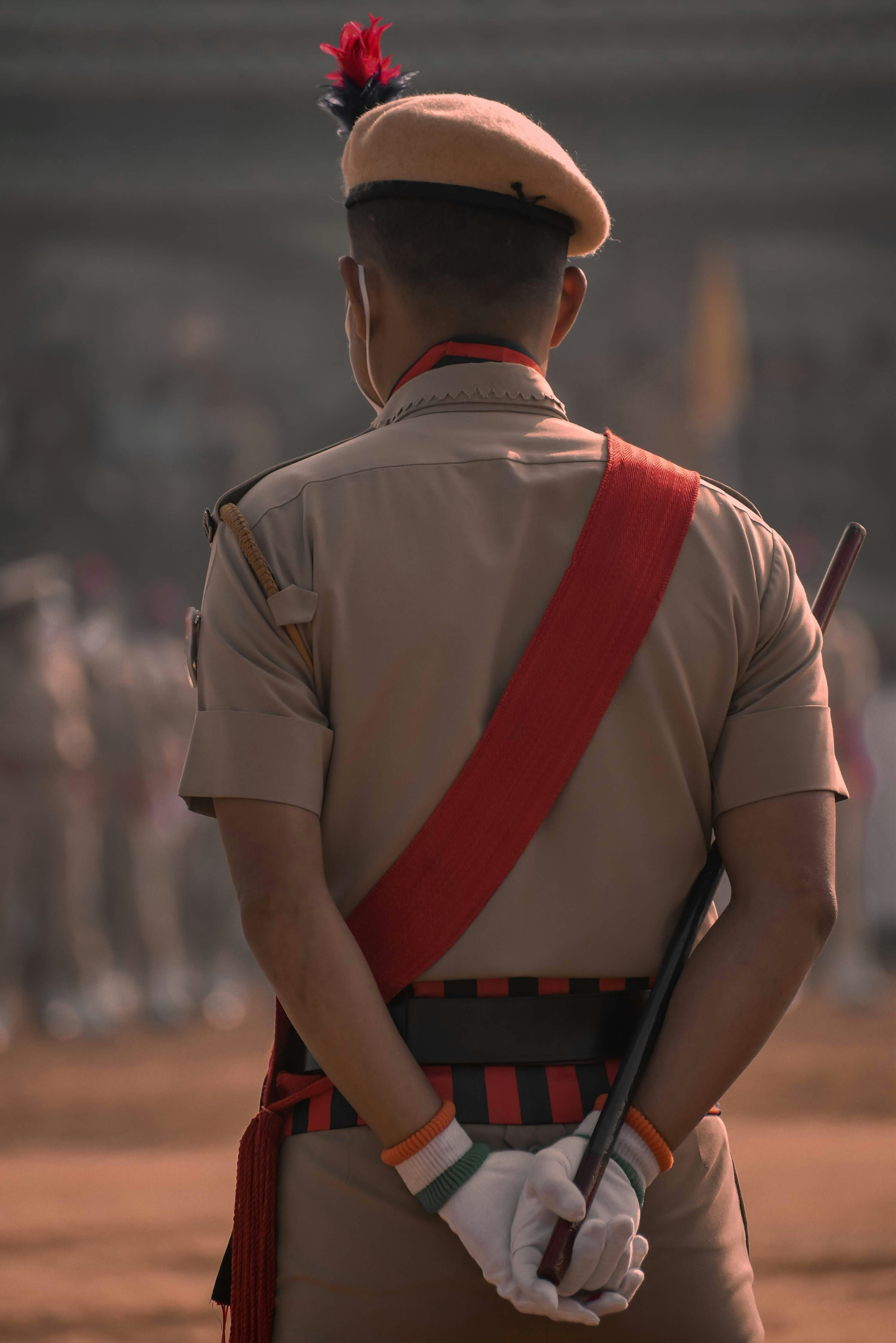
Photo: Shiv Kumar Das
The Soldier
By Rupert Brooke
If I should die, think only this of me:
That there’s some corner of a foreign field
That is for ever England. There shall be
In that rich earth a richer dust concealed;
A dust whom England bore, shaped, made aware,
Gave, once, her flowers to love, her ways to roam;
A body of England’s, breathing English air,
Washed by the rivers, blest by suns of home.
That there’s some corner of a foreign field
That is for ever England. There shall be
In that rich earth a richer dust concealed;
A dust whom England bore, shaped, made aware,
Gave, once, her flowers to love, her ways to roam;
A body of England’s, breathing English air,
Washed by the rivers, blest by suns of home.
Rupert Brooke captured so eloquently the sentiment of the soldier, and if I were to substitute India, my beloved country, instead of England, every word in his poignant verse rings deep and true.
Strip a soldier of his uniform and his medals, extricate him from the pomp and pageantry, give him his gun and his orders, and let him loose at the borders in the face of the enemy, and this last wish remains in his heart as he fights so that the rest of us may stay free. He expects he may die, but is determined that we live.
He may not return from the frontline, he may succumb to the rigours of the weather, die during training or lose the battle to PTSD. But every Indian soldier, seaman, pilot, every member of the medical and engineering corps, every cook and canine, man or animal, is prepared to sacrifice all.
All he may leave behind are memories, and the undying respect of a grateful nation.
The Vacant Chair
The mess hall is unusually quiet this evening.
My medals feel heavy on my chest, not from their intrinsic weight, but from the memories they carry. I stroll towards the exclusive dining table we have prepared—one not meant for the living, but for those who once lived, and now inhabit our hearts.
At the centre lies the National Flag, displayed with dignity, reminding us of the faith and allegiance every soldier swears to our motherland. Reverently cradling this national symbol is the circular table, with seemingly random objects, yet each of which silently speaks of unbroken bonds, of everlasting gratitude, of the spontaneous sacrifice of one's life on an unforgiving battlefield.
On one side of the table stands a single red rose, its petals vivid and alive, yet it seems to bleed silently as did the blood shed by my comrades in the trenches and fields of war, bereft of one last homecoming, their remains in places that should never be abodes of final rest.
Beside it, a thin slice of lemon—in painful remembrance of the bitterness of loss, of the suffering endured by both soldiers and the loved ones they leave behind.
A small dish of salt glistens under the focus light; each grain seems to carry the enormous weight of heavy tears shed in memory. Next to it poignantly rests an inverted glass, in solemn regret that those who have perished will never again raise a toast with us.
The intermittent flicker of a candle catches my eye, its flame fragile yet unwavering. To me, it whispers hope—a possible dream that somehow, someday we might meet our brothers-in-arms again in an afterworld, a better world, free of battlefields and bloodshed.
Placed within the very womb of the table is the Army insignia, the very emblem of our creed, binding us together in life and beyond. For once a soldier, always a soldier! And there, pushed back ever so slightly from the table, poised just so, in almost incomprehensible symbolism, is the vacant chair—the most eloquent tragic element in this tableau. A chair that does not merely mark a soldier's absence, but whose empty spaces scar our very souls.
I stand in silence, my hand instinctively rising to my forehead in salute. My throat tightens, but no words come out. Around me, younger officers bow their heads, perhaps unable to fully comprehend the ghosts that sit at this table with me.
For me, every rose, every grain of salt, every flicker of this candle carries a name, a face, a laugh that once echoed in the barracks. They may have long gone, yet tonight, at this table, they are with us, raising a toast, sharing a smile, warming our hearts with their tales.
In this infinite stillness of a crowded mess hall, I whisper the only words that feel true:
“You are missed. You are remembered. You are ours—always.”
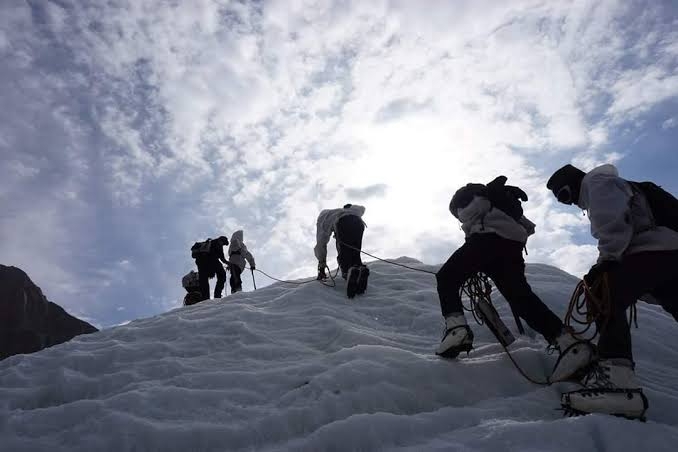
Photo: General Rajan Ravindran
The soldier trains hard, in the knowledge that his life, and those of others, depend on it. Sadly, in harsh terrain akin to real battlefields, nature and unforeseen misfortunes prevail. It is not commonly known that in Siachen, the world's highest battleground, it is estimated that out of approximately one thousand soldiers who have lost their lives, almost eighty percent have died outside of war, due to the almost inhuman, brutal conditions in the region. No less tragic are the rigours of mental stress. The CRPF lost, by all accounts, over 180 personnel due to suicide in three years between 2021 and 2024.
Physical or psychological, the soldier is faced with challenges that seem endless and unforgiving. Bravery and sacrifice in these circumstances are all the more astounding, yet these men fight alone, together, for each other.
I May Let You Go, But Will Never Let You Down
I May Let You Go, But Will Never Let You Down
The soldiers froze, horror etched on their faces. But one among them moved almost instantly, and before he could, or would be stopped, he had dropped his rifle, shed his pack, and with unthinking urgency threw himself upon the fissure. “Hold on!” he shouted, lowering himself down, body straining against the ice, arms groping in the abyss where his comrade hung on to the sharp wall of the precipice, eyes pleading, fingers bleeding, clinging to life and hope. In the dark, one's hand found the other's, a grip fierce and unyielding, born of desperation, bound by flesh, bound by years of brotherhood forged in fire and silence.
For an infinite moment, it seemed hope must win, prayers heard and answered.
The brave rescuer braced, grinding his teeth, closing his eyes in a final ditch effort, trying to haul his brother up. But the ice was treacherous, and the weight unbearable. One last desperate heave, and then tragically, his foothold gave way. A collective, uncomprehending gasp from the entire squad burst into the twilight sky as they saw him slip. His body vanished into the crevice, his hand still locked around his comrade’s until the ice itself tore them apart.
Silence followed, heavier than gunfire. The men stood at the edge in disbelief, staring into the shadowed rift that had swallowed one of their own. A soldier who did not hesitate. A soldier who gave his life not for medals or glory, but for the simplest, most sacred reason of all: to save a brother.
Legend has it that even now, when the wind whispers through the glacier, men would swear it carries his voice—not in anguish, but in quiet defiance, that even death could not break the bond of comradeship.
And so his story lives on, not in books or monuments, but in the hearts of those fortunate enough to have witnessed true courage; an outstretched hand, one life given for another.
As a cadet, living in close proximity with and amongst brothers-in-arms, the Army is more than an institution; it's an incubation centre, in the womb of which never-to-be-forgotten lessons are learned and cherished. Loyalty, faith, teamwork and unquestionable discipline are sacrosanct qualities in a soldier's life. Mine were amazing times, replete with innumerable experiences shared with wonderful comrades.
Behind the barrack was a narrow strip of land, and then beyond, the road less than four metres width, that divided us from the OTA House-the residence of the awe-inspiring Commandant, Tiger Tyagaraj. As we marched to the drumbeat of our cadet days, this home, its meaning and its legendary occupant, served both as a reminder of how far the road-to-be traveled was for us young lads. That fifteen feet of road that separated our quarters from the home of the Chief, was to me an infinite road to be travelled, but it remains a passionate motivation for each cadet that journeys through these hallowed grounds.
A Soldier is Born
A Soldier is Born
The bugle splits the dawn before the sun has even painted the sky. You watch the cadet rise from his narrow bed in one swift motion—no hesitation, no grumbling, just discipline etched into muscle and bone. His boots shine as though they hold a piece of the morning star, and his uniform clings sharp against his frame.
While the world still sleeps, the cadet is already on the parade ground. You see his breath form a white cloud in the cold air as he runs in stride with his comrades. Their feet strike the earth in perfect rhythm, as if the soil itself has learned to obey their cadence. Sweat beads on his brow, but his eyes stay steady, focused—not on the discomfort of the moment, but on the man he is shaping himself to become.
Later, in the classroom, he sits straight-backed, a pen moving swiftly across his notebook. Military history, strategy, engineering—the lessons come in a flood, but his mind is a vessel determined to hold them all. He does not simply learn; he absorbs, for he understands knowledge so earned, may one day save his life.
The mess hall offers brief respite. You see him laugh with his friends, the youthful energy spilling out between spoonfuls of rice and curry. For a few moments, they are just young men, teasing, joking, alive with camaraderie. Yet even here, the undercurrent of discipline flows—plates aligned, posture intact, time kept sharp.
Afternoon drills follow, and the cadet returns to the field where the sun now burns overhead. Rifles gleam, commands cut the air, and you notice how his body answers instinctively. It is no longer simply muscles and will, it is a boy metamorphosing into a man, it is precision, trained obedience, and strength molded for service. The fatigue shows in his shoulders, but the pride never leaves his face.
As evening falls, the cadence slows. Study hours stretch under the glow of yellow lamps. You watch him at his desk, eyes heavy but determined, pages of notes, books, and reflections - tactics, military history and geography. The battle of endurance teaches him to be resilient and not succumb to weakness of the flesh.
By nightfall, when silence finally settles, the cadet lies back on his bed. His day has been long, his body bruised by effort, but his spirit holds steady. You realize then: his life is not about one grand act of heroism, but a thousand small victories over weakness, over fatigue, over doubt.
And as an onlooker, you understand—the making of a soldier begins not in war, but in these unseen, relentless days.
Epilogue
When I look back upon my journey as a soldier, who began as a cadet pounding the earth, and who retired as a Lieutenant General with a lifetime of memories, I see not the medals, the ranks or the salutes- but faces. Faces of comrades who stood shoulder to shoulder when the world blurred into smoke and thunder. The years have moved on, yet their voices echo in the wind, their laughter still rings in the rain that falls on parade grounds, somewhere in time and space.
These anecdotes are my salute to them-to friendship to sacrifice and to the spirit of the soldier that never retires. For though the boots are hung, and the rifle is at rest, the heart still beats to the rhythm of a distant drum-the call of the soldier's life, eternal and proud.


You may also like
Read•Issue 10
The Many Homes of Streeties
BY Sindhoor Pangal, Ahana Rangachari, Surabhi Venkatesh, Juhi Patel, Sowjanya S
Read•Issue 10
The Shape of an Irula Home
BY Jeyanthi R
Read•Issue 10
Yangdol
BY Pankaj Singh

Read•Issue 10
Issue 10 | An Introduction
BY Ramya Reddy
Read•Issue 9
Chennai: Voices from a City
BY V.Sriram

Read•Issue 9
A Sacred Drift Called Bhoomi
BY Latha Menon

Read•Issue 9
Etched in Stone: Rock art of Ladakh
BY Ahtushi Deshpande
Read•Issue 9
The House by the River
BY Parvathi Nayar