The Quiet Magic of Mountain Life
23 September 2025WORDS BYSangeetha Shinde Tee
PHOTOGRAPHY BYRamya Reddy, Sangeetha Shinde Tee
June 1977, Delhi: The Book
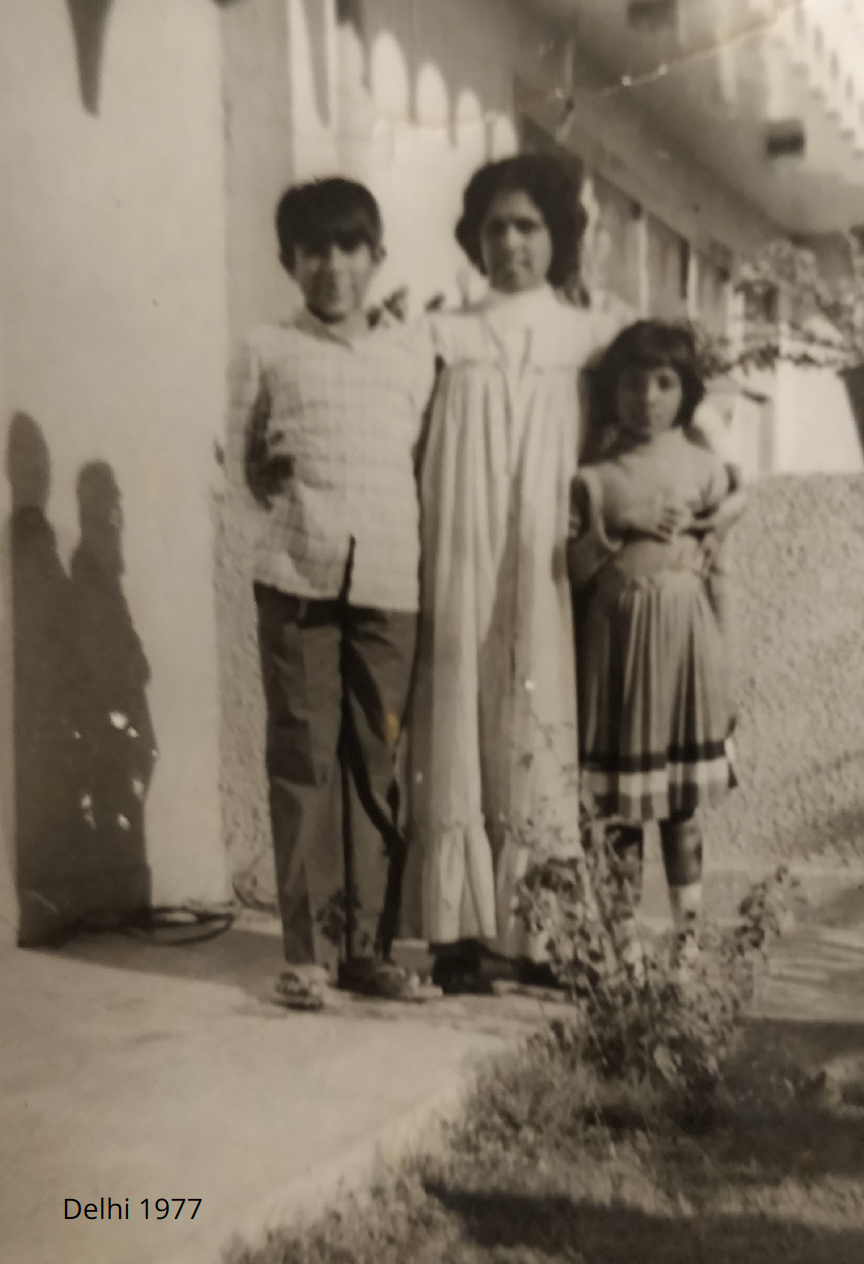
Photo: Sangeetha Shinde

I was six years old when I first opened The Enchanted Wood by Enid Blyton.
It was the middle of a punishing Delhi summer — the kind where the sun seemed to throb in the sky, the air shimmered, and the ceiling fan rotated with lazy resistance. I remember sitting cross-legged on the chipped, tiled floor, wedged between the whirring air-cooler and the low bookshelf. The breeze from the cooler lifted the hair from my forehead and ruffled the pages as if the book itself were impatient for me to begin.
The cover alone was a portal: deep green, with two children gazing up into the canopy of a giant tree, a deer and a rabbit looking back at them, and two fairy folk perched high on a branch as if they had been waiting for me all along. From the first page, I stepped through into another life: a forest where brownies made furniture out of toadstools, animals spoke in perfectly formed sentences, and strange, wondrous lands revolved slowly past the treetops like clouds with personalities.
I would linger there for hours, lost in its pages, my motley crew of dolls lined up for elaborate tea parties that always dissolved into storytelling. They listened politely, never interrupting as I told them of Toyland, the Land of Birthdays, the Land of Spells. Those imagined places became as real as my own front room. And somewhere between the hum of the cooler, the scent of wet khus matting, and the shifting summer light, I think the writer in me was born - in the magic of a made-up world that somehow felt more truthful than the one beyond my window.
.......
1981, Wellington: The Forming
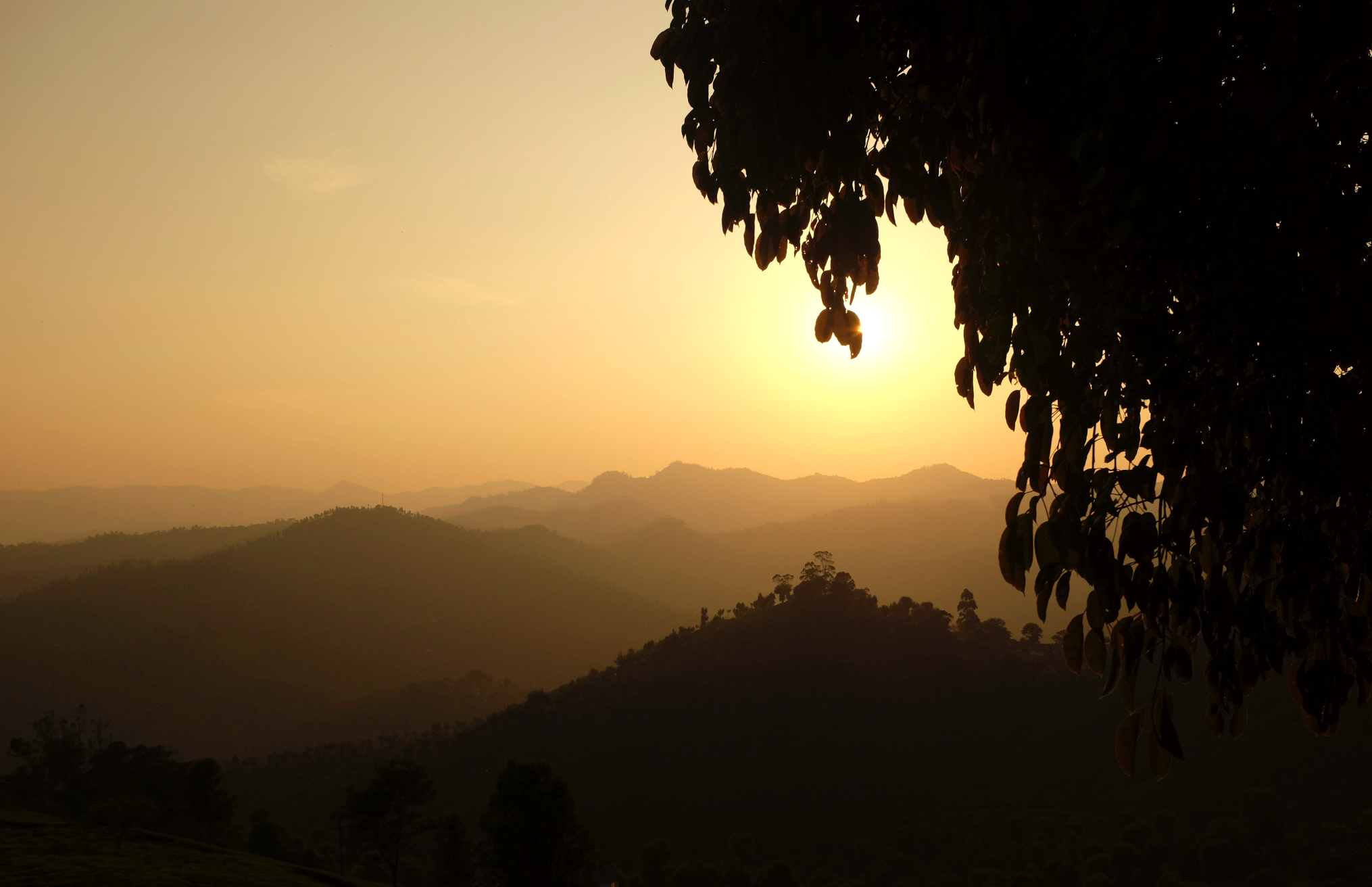
Photo: Ramya Reddy
A few years later, my father, an army doctor, was posted to the Nilgiris.
We travelled up from Mettupalayam, in a battered old Ambassador, winding through roads that smelt of eucalyptus and damp earth. The air thinned, cooled, and sweetened with each curve. I was ten years old, wide-eyed, and felt I had stepped directly into Blyton’s enchanted forest — only this time the magic was tangible.
Here, there were no Silky the Fairy or Moon-Face with his Slippery Slip, but the forests were alive with bison, leopards, and monkeys. The wind carried secrets through the tea bushes, making you stop mid-step to listen. People’s lives were entwined like the roots of the great shola trees. Every adult was an uncle or aunt; every child, a brother or sister in a sprawling, informal family. The grapevine was our own magic messenger — swifter than rumour in any city, carrying blessings or curses depending on which end you landed.
In the early eighties, childhood here was stitched together with small adventures. We rode bicycles down empty roads, tyres humming against the tarmac. We stopped at tiny bakeries for apple cakes that crumbled into sticky, delicious dust. We wandered in and out of each other’s homes without knocking, raided kitchens for biscuits, sprawled across sofas, or played games that defied rules. Aunties kept us in line with nothing more than a raised eyebrow; uncles dispensed life lessons whether or not we wanted them. The village raised us, and the village never forgot to keep a close watch.
It was a fishbowl existence. From the outside, everything seemed magnified; inside, it felt both constant and ever-changing. One week, a leopard would slip silently across a road at dusk; another, we’d gather around a fire to share ghost stories. Even the smallest incidents grew large in the retelling. And in a place this small, stories travelled faster than the wind that rushed through the valleys at night.
.......
1992, Bangalore and Beyond: The Journey

Photo: Sangeetha Shinde
Eventually, life widened, first in my head and then for real.
As adolescence arrived, so did a restless longing — to know what lay beyond the folds of the Blue Hills, to seek the kind of magic I thought might exist in bright, sprawling cities. I left for Bangalore, where speed was the unspoken language, and anonymity a relief after the constant gaze of a small town. But it also came at a price — the loss of those invisible threads of connection that had always bound life together in the Nilgiris.
From Bangalore, my journey became more nomadic: Dubai, Bahrain, London, Brussels, Greece, Türkiye. I collected cities like chapters in a book, each one written in a different tone. In Dubai, I learnt spectacle; in London, creativity; in Brussels, the quiet efficiency of order. I was a copywriter, a lecturer, and an author. I married, divorced, and married again. I made friends and lost some. I rescued animals, each one altering the arrangement of my heart, breaking it to form it again, slightly more askew every single time.
Yet even in the busiest cities, echoes of the hills came with me. In quiet cafés, I found myself listening to birdsong beyond the traffic. In crowded markets, I sought the rhythm of voices in barter and banter. In parks, I paused to catch the scent of wet earth after rain, and was instantly transported to the slopes above Coonoor after a downpour. These fragments were my private compass points, reminding me of where my sense of wonder had been formed.
There were years I thought I’d outgrown the Nilgiris — that my life was meant to be written elsewhere. And yet, wherever I went, I carried the stillness of its mornings, the intimacy of its community, and the knowledge that small things matter. That was the lens the hills had given me, and it shaped how I saw every new place: as a story waiting to be heard.
.......
2023, Bettati: The Return
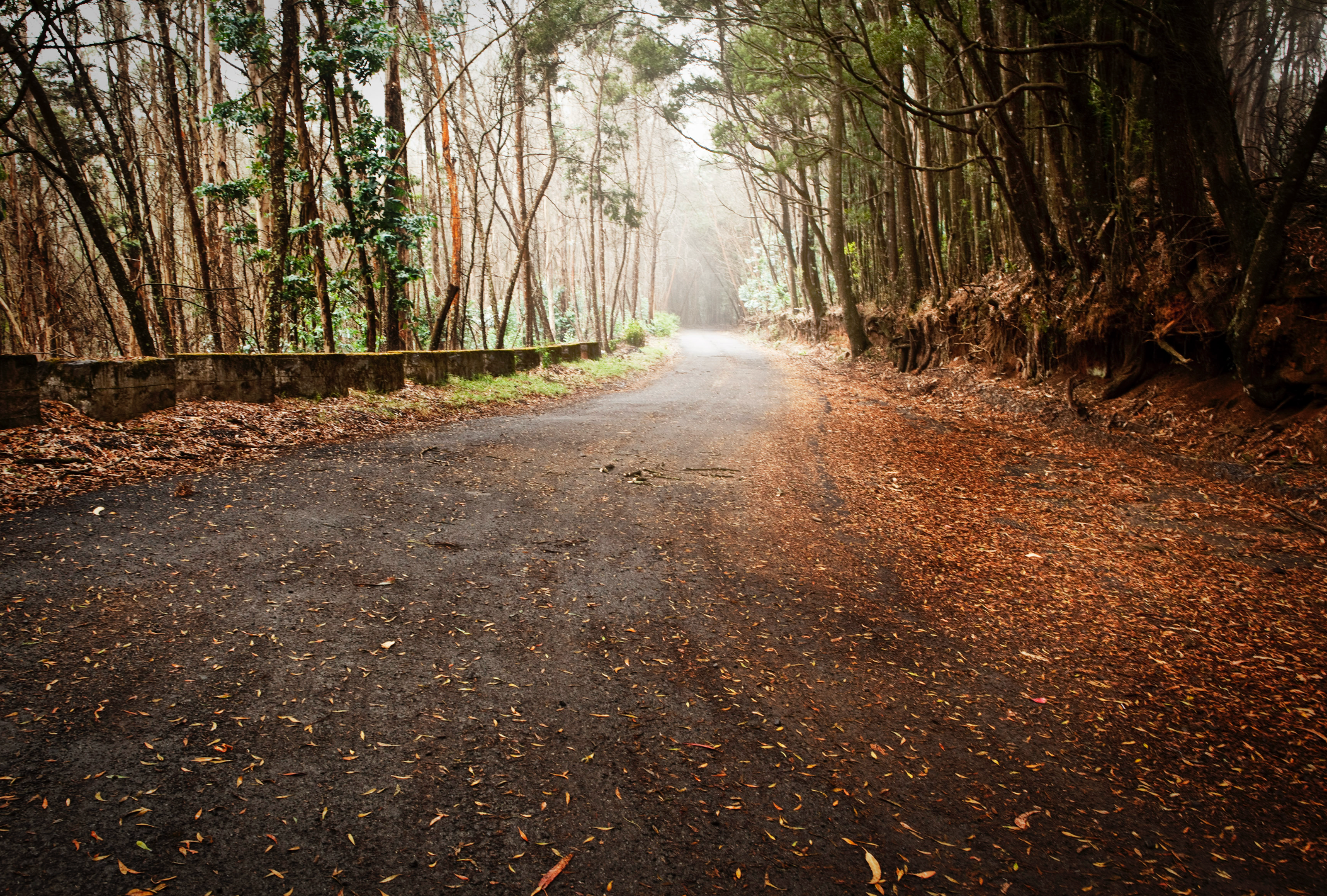
Photo: Ramya Reddy
Coming back to Coonoor full-time was both a homecoming and a revelation.
Much had changed. Tea estates had become gated communities. The old bakeries no longer made apple cakes. Wild animals wandered into town more often, their habitats altered by human ambition. Big cars replaced the rickety buses with peeling paint and groaning engines. Yet when I stood on the path to Ralliah Dam - a path I had once found by pushing through undergrowth — I felt the same breeze cooling my face, heard the same birdcalls, smelt the same mix of moss and leaf-litter. The road might be tarmacked now, but the hills themselves had not forgotten me, it felt.
So, I began to listen again. Properly! With reverence!
I listened over dawn cups of steaming tea when mist curled like breath through the tea bushes, the air damp with promise. I listened in the market, where women from nearby villages haggled with a cadence that rose and fell like a song. I listened in the hush of the hospital waiting room, where a doctor bent close to an elderly woman, offering comfort, each word carrying the weight of care. I listened at dusk in a tea shop, where the clink of cups and the sigh of the kettle said more than any conversation could.
The Nilgiris does not shout; it hums. Its stories are layered: some ancient, some fresh as the morning. The Todas weave their histories into their craft. Forest guards carry unspoken tales of nights under moonlit canopies. Schoolteachers watch generations pass through their classrooms like migrating birds. Every creature—human or otherwise—is part of the incredible, interconnected, and ongoing narrative.
......
2023, Nilgiris: The Ongoing Story
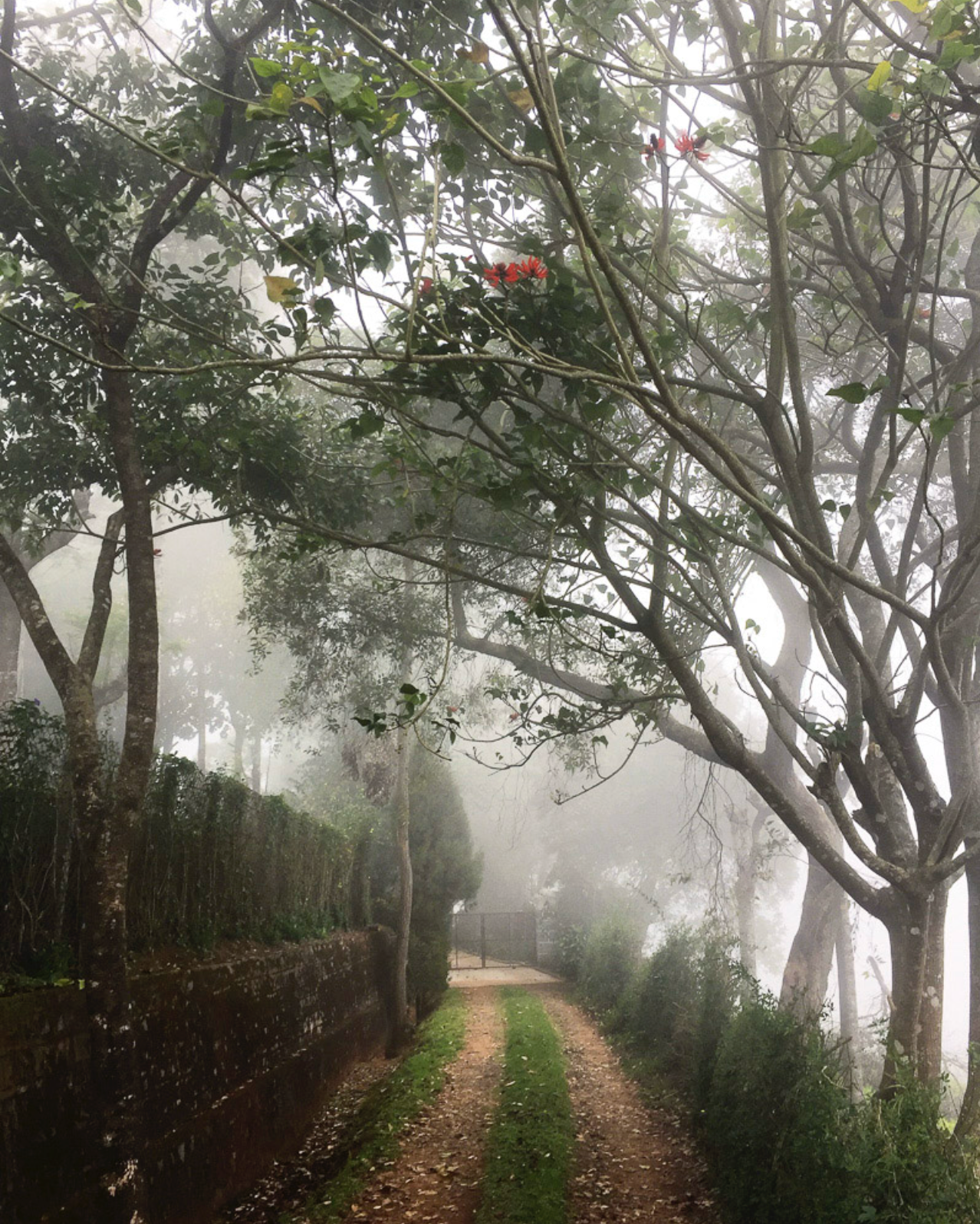
Photo: Ramya Reddy
There is a lovely quote from Ijeoma Umebinyou that perfectly sums up my life of wanderlust, be it in my mind or across this marvellous planet. I came across it while living in Turkey about five years ago, and it resonated anew as I started to put down roots once again in the spaces of my youth. “So here you are, too foreign for home, too foreign for here, never enough for both.” As I listened afresh to new and old voices in a familiar, yet new, Nilgiris, in that renewed attention ,there was a deep calling to chronicle life here, to re-embrace my sense of belonging to these hills. And thus the idea of a magazine was born. It spilled over from a need to gather voices, to cradle both memory and reinvention, to hold the old and the new in one breath. I wanted a chronicle of these hills, a living record of its truths: the small and the vast, the intimate and the boundless.
I wanted to make an offering back to the land that shaped me, and still does. Here, richness hums quietly in the work of good people, their legacies stitched into the slopes with selfless care. Here, talent and story wait at every turn, each lived moment asking to be retold. All the years of wandering, of writing, of learning to listen in faraway cities and strangers’ voices, seemed to gather themselves here, like streams finding their course back into a single river. Out of those experiences — professional, personal, broken and mended — came the realization that the only way to truly honour the Nilgiris was to build a collective voice for it. And so, with the help of many hands and generous hearts, Inside43 was birthed, a crowd-funded community magazine: not just mine, but one that belongs to anyone whose heart has felt these mountains. Every edition is stitched together not only from my creativity, but from the voices of neighbours, elders, artists, guardians of tradition, and those who carry tomorrow in their eyes.
In that sense, life has come full circle. The stories I once sought in enchanted woods and faraway places now rise from the ground beneath my feet. The richness of a life scattered across continents has folded itself back into these mountains, allowing me to see that every departure was in fact a preparation for return. The Nilgiris teaches you that memory and immediacy are not opposites but companions; that history is alive when told through the breath of those who still walk its paths; that every apple cake eaten, every bicycle ride taken, every whispered story by firelight has a place in the larger weave. What we are shaping here is not nostalgia, but a living history — one that is layered with tenderness, turmoil, devotion, and reinvention — a history that belongs to all who have touched and been touched by these hills.
Today I walk the same paths I once ran, but with the knowledge that every glance, every conversation, is another sentence in the great book of the Nilgiris. Here, the impermanent becomes wondrously permanent. Old stories find new tellings; people linger in memory and legend. The Malabar squirrel still leaps across branches; monkeys still tease and unsettle; Shola forests spill down ridges; the Neelakurunji continues to bloom, rare and defiant. And always, the crucible of these mountains forges fresh stories that render them eternal beyond stone and soil.
And when the last word is written, these hills will carry on. And because I have lived within them, with them, and because of them, so too will I — a small fragment of nothingness woven into eternity.
.......
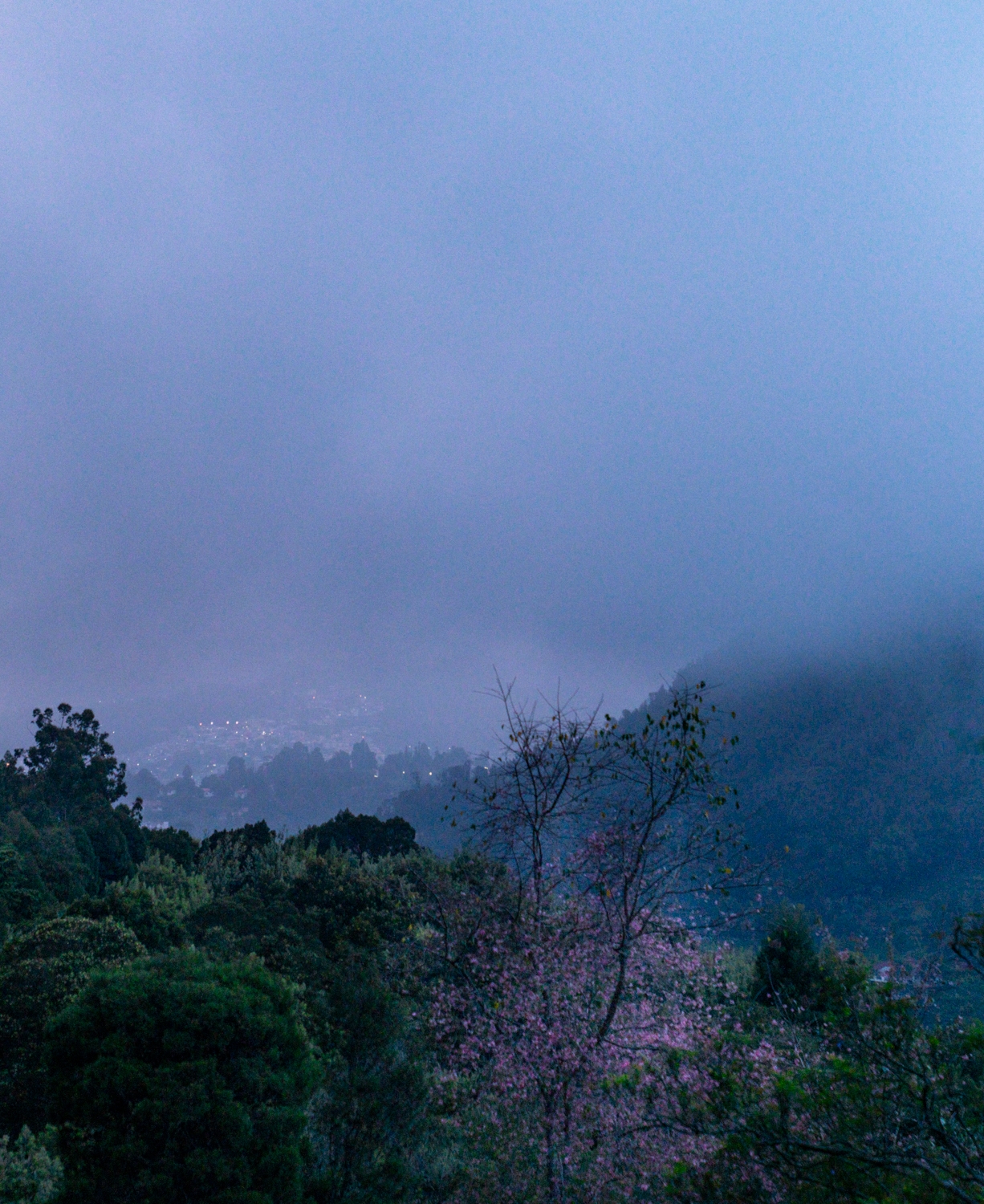
Photo: Ramya Reddy



You may also like
Pause•Issue 10
Eyrie
BY Suprabha Seshan
Pause•Issue 10
Carrying Homes Within You
BY Radhika Iyengar
Pause•Issue 10
A Conversation Between a House and a Ghost
BY Pankaj Singh
Pause•Issue 9
The Room at The End of Life
BY Ashna Ashesh
Pause•Issue 9
The Haiku Dive into Life
BY Ranu Jain
Pause•Issue 9
Searching For Peace
BY Jackie Morris
Connect•Issue 8
The Keeper of Indigenous Memory: Remembering Janagiamma
BY Ramya Reddy

Pause•Issue 8