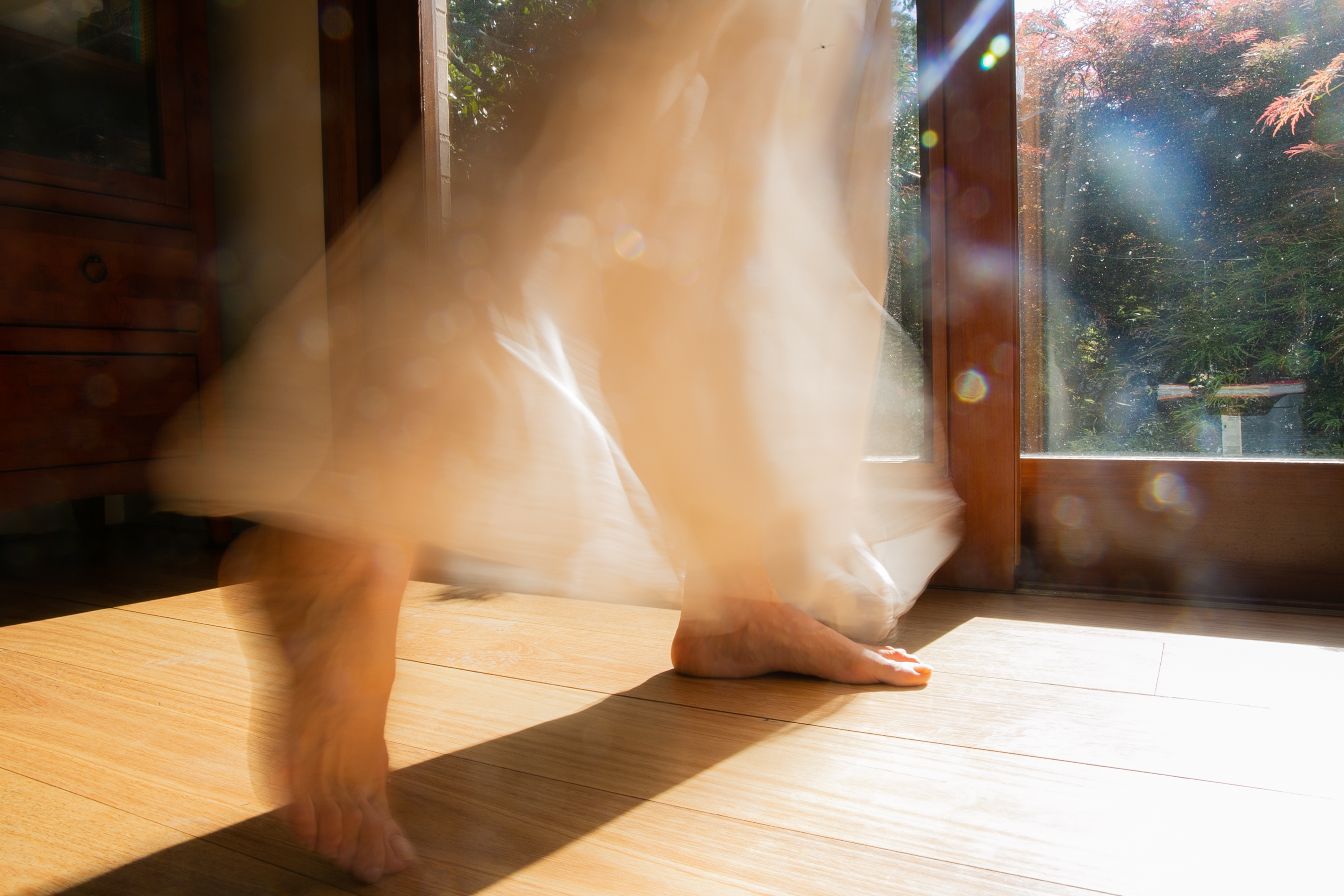
I am on the train, and it seems like a regular commute from my home to Town Hall station until I hear a fluttering sound. Not too far from me is a pigeon strutting about in the otherwise empty carriage. It is bobbing its beautiful head from side to side with an air of supreme calm and confidence. As the train starts to slow down and approaches the next station, an announcement is in progress. The pigeon takes its position, facing the door. The doors open, and the pigeon and I step off the train together, two pairs of starkly different feet touching the ground in sync.
This brief instant, sharing a part of my quiet train ride with a ticketless pigeon, brings me some mirth, a breath of fresh air, and leaves me charmed. There is a sense of wonder when, on the wings of the ordinary, comes the extraordinary.

“Wonder is the heaviest element on the periodic table.
Even a tiny fleck of it stops time.”
~ Diane Ackerman
In many ways, the moment on the train is for me a Haiku moment.
stepping off
the train with me
a vagabond pigeon
But before I dwell a little on haiku, I am reminded here of Tennessee Williams’ question: “Has it ever struck you that life is all memory, except for the one present moment that goes by you so quick you hardly catch it going?”
What could be truer? The moment we hear the sky’s first rumble, and a single drop of rain falls before it is a full shower, that moment has become a memory. And yet, the moment is all there ever is, however flighty!
The present moment is what 17th-century Japanese poets who invented the haiku genre of poetry celebrated in their short poems, which are rich in meaning and deeply evocative in image, sound, and rhythm. The haiku, which originated in Japan, is said to be a “one breath” poem, as it is traditionally composed of 17 syllables, the span of a single breath. However, unlike English, in Japanese, there are no syllables; instead, there are "on," meaning sounds or breaths. Matsuo Basho, who is believed to be the inventor of haiku, let the doors open when he said that so long as a poem ‘resonates’, it can have more or less "on."
Haiku, the short form of unrhymed (three-line) poetry, in its tiny space, presents an unadorned image of the moment it captures. It sees the world exactly as it is: the coolness in a breeze, the cackle of a cockatoo, without alluding to the filters of intellect and emotion. thing in its purest form is plucked from the continuum of life, and served as one striking moment with such exactness that the reader may suddenly be made aware of something larger.
This haiku, for instance, by the famous Japanese Zen hermit and poet Ryōkan Taigu, is one of my favourites:
This haiku, for instance, by the famous Japanese Zen hermit and poet Ryōkan Taigu, is one of my favourites:
the thief left it behind -
the moon
at my window
With a touch of humour, Ryokan’s haiku evokes a sense of melancholy as though the poet is feeling bad for the thief who couldn’t take what was most valuable to the hermit, the moon. The moon in Japanese poetry is a symbol of enlightenment, and the poet seems to wish the thief had paid more attention to the beautiful moon rather than the only thing the poet had, his humble robe, which he has given away to the thief.
A familiar object like the moon shines in a new light as the poem ends with a flash of insight that there is much more to gain in life if we do not take things for granted. We are thus made to see the grace, beauty, and wisdom of all that we think is small, ordinary, or overlooked, and to complete what is essentially a poem left open by the poet. To see new vistas of truth.
The Japanese haiku master Seisensui calls the haiku an “unfinished poem” that invites the reader to participate in filling in the spaces left blank by the poet. It is the empty space or the silence which gives meaning to the words preceding it. In haiku, "empty space" refers to the concept of "ma" in Japanese aesthetics, where the negative space between elements is considered just as important as the filled space, allowing the reader to actively participate in creating the poem's meaning by filling in from their repositories of experience; essentially, the emptiness is not a void but a place for contemplation and deeper understanding.
To me, a haiku has a hummingbird stream of consciousness. It is not just tiny and light like a hummingbird, but also embodies motion and stillness in one harmonious whole. The smallest moment can hang, glistening in stillness, and then, gone. The poem roots us in the moment, even as we flow through the river of time, and through the haiku, we watch the world being created anew with every instant. The stars, a tree, and dew on the petals. Each recreated by the poet in a way that makes it appear anew, grander, larger.
It is as if the poem opens a door for a sudden flight of inspiration by striking a single note.
The noted French semiotician Roland Barthes likened a haiku to a ringing bell—a sound that is clear, precise, and unique. He calls it tintinnabulation, the chiming of bells that clears the mind for a flash of insight, bringing us to a space of silence. Just as the lingering sound of a bell can dim external distractions by slowly centering the mind, so does a Haiku trim away the excess of language to bring the mind to a state of single-pointed awareness.
I write, erase, rewrite
Erase again, and then
A poppy blooms.
~ Katsushika Hokusai
Perhaps we are all bells, sounding and resounding, struck by what we experience as we move through the world — the passing breeze, the song of the lark, sunlight shining on our skin, words of a poet, the sudden taste of sweetness in an orange, a message from a dying friend. We reverberate from these vibrations, and the reverberations may all continue their faint throb around us even after the moment has passed.
That a haiku taps into this shared oneness with what it observes is of much interest to me, and in my writing practice, it serves as a reminder of how transformative it may be to open our hearts to the tiniest details in ordinary things.
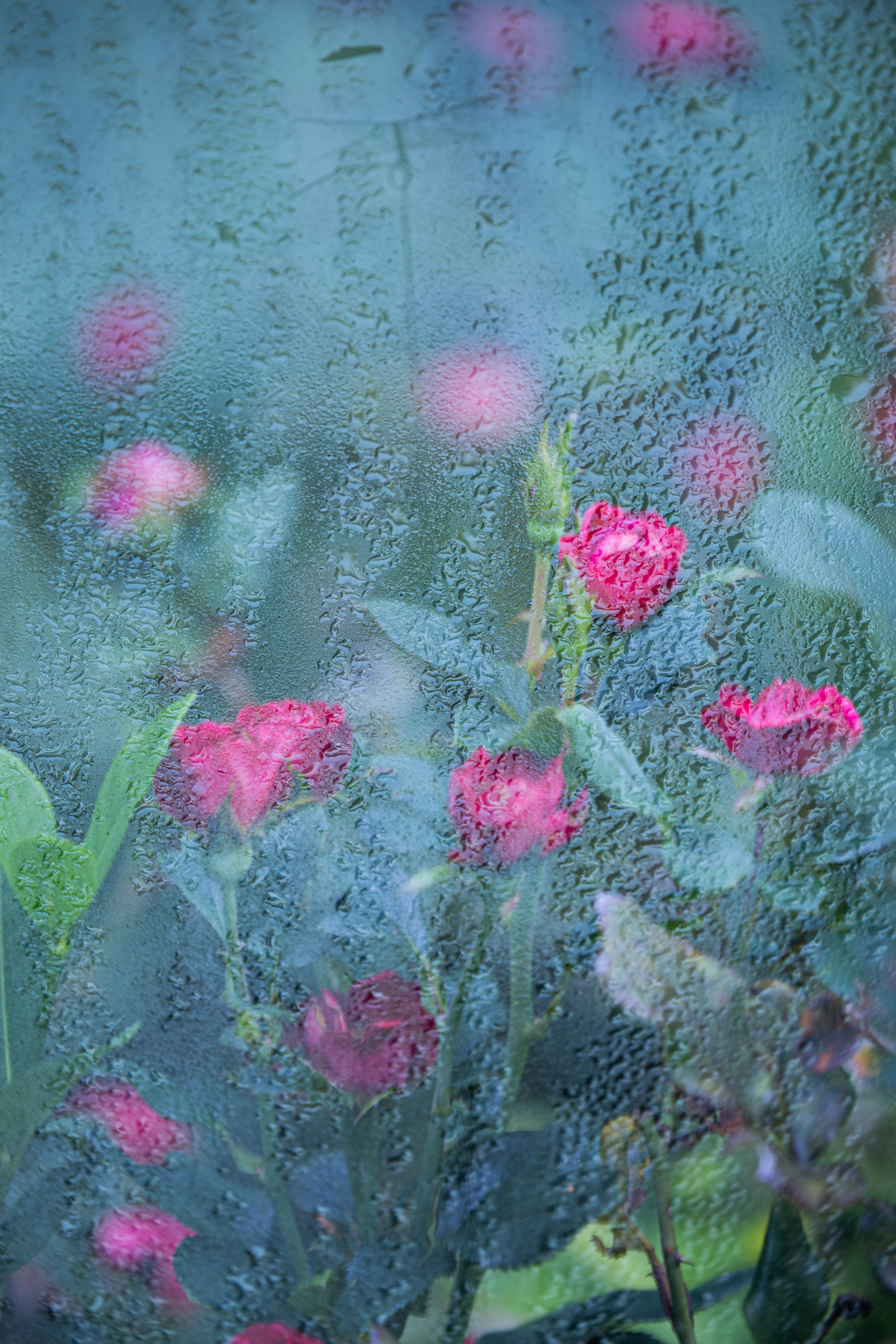
Here are some haiku that have come to me at different times, in my most routine, small, everyday moments – during a walk, riding a bus or train, cooking, photographing, talking to a friend, doing the dishes, holding a flower. The accompanying photos are intended to deepen the connection between the haiku and the image, fostering a more contemplative understanding of the moment. The Japanese call it haiga, which is not a literal representation of the poem, but a more synergistic interaction where one might expand the other.
I hope that my small epiphanies can convey to the reader or listener the mysticism of the mundane, while creating a soundscape that evokes the richness of daily sounds around us, including moments of silence, as a sensory experience. And the awareness that everything is humming with possibility and worthy of attention.
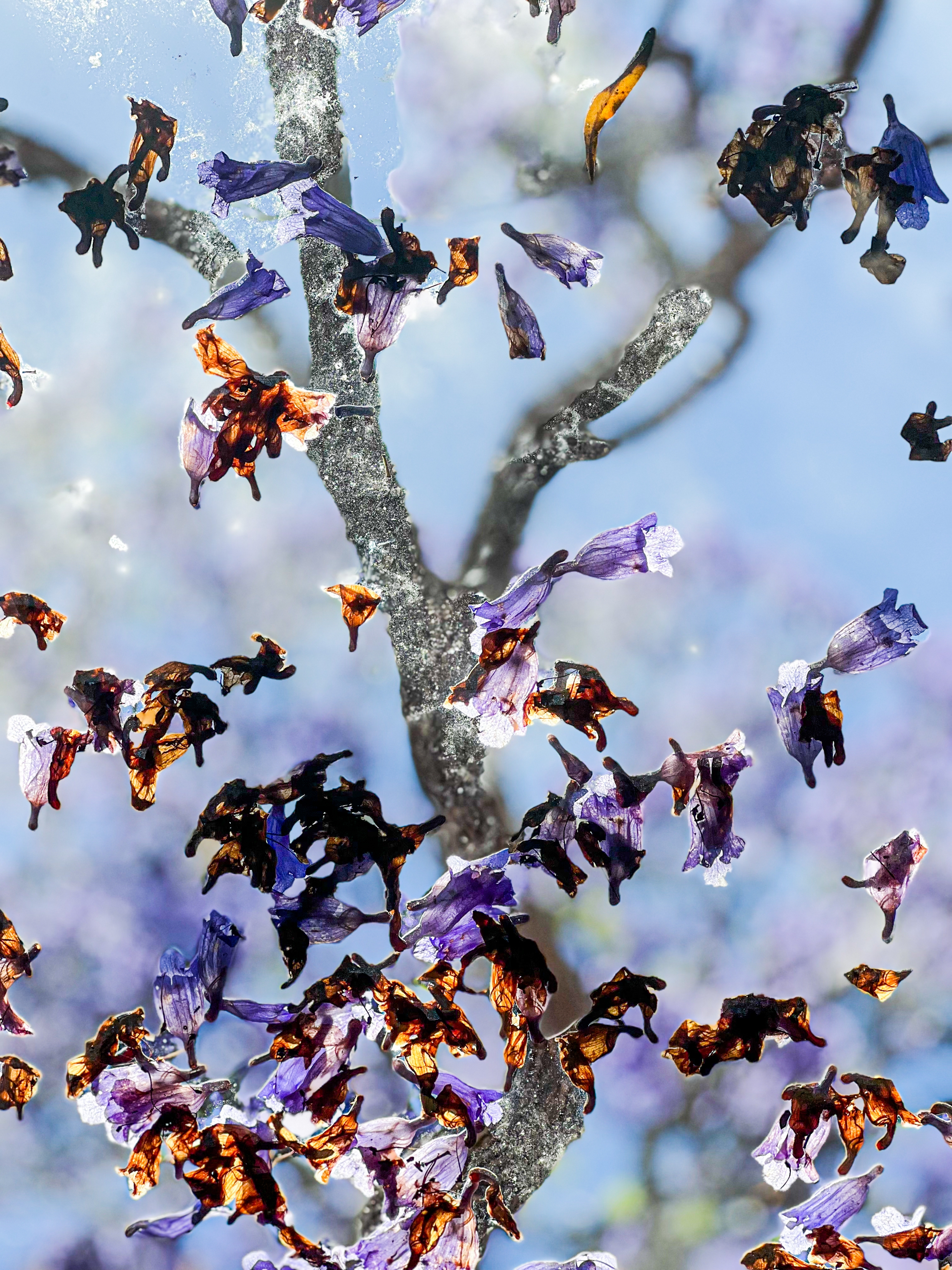
the purple silence
of soft november rain
jacaranda
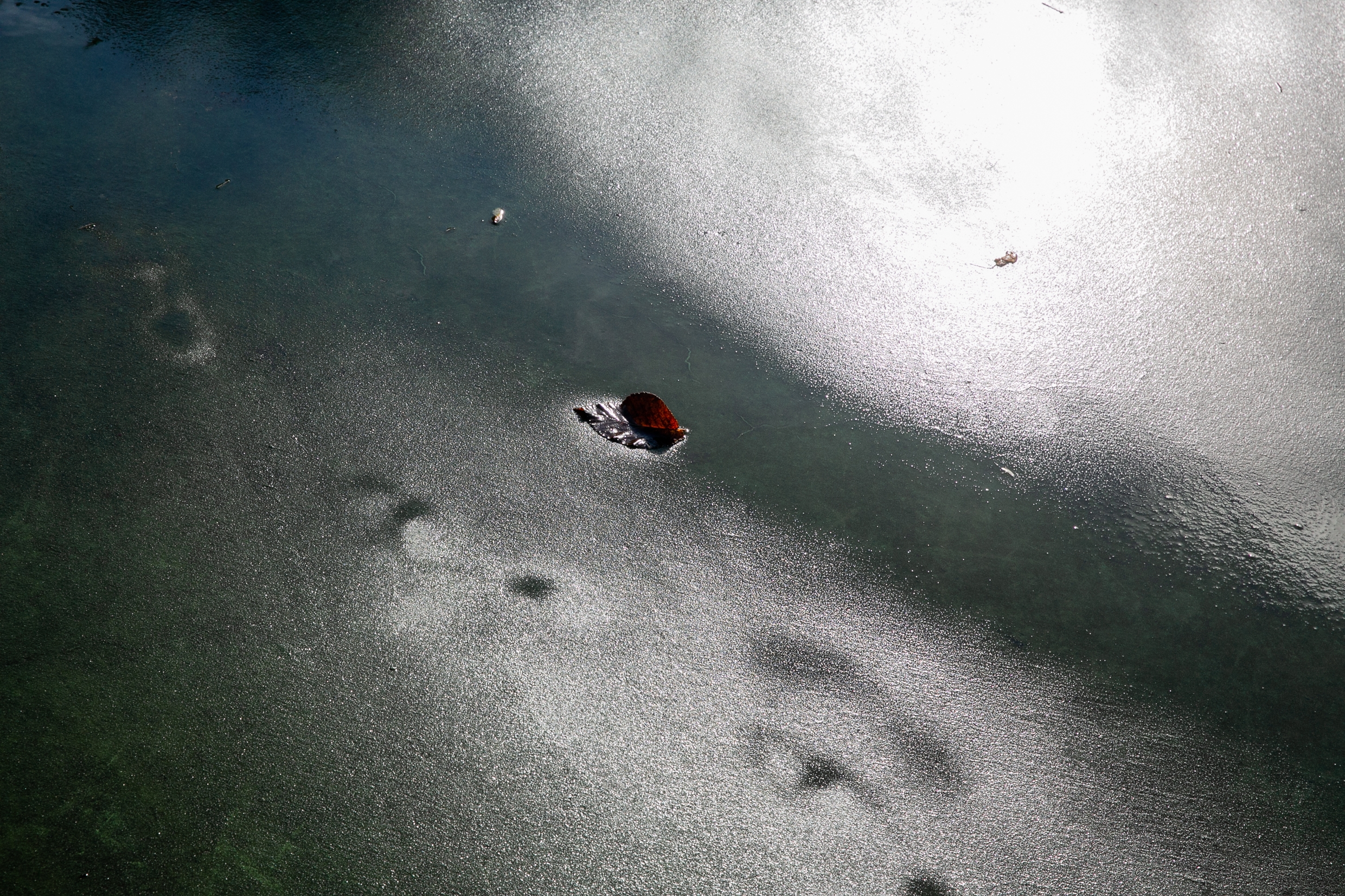
the way you talk to me
after you leave…
summer rain
incense smoke
improvising
a silent raga

dusk breeze
fluttering
the light and shadows

garden irrigation —
in the sprinkler’s mist
the hum of rainbows
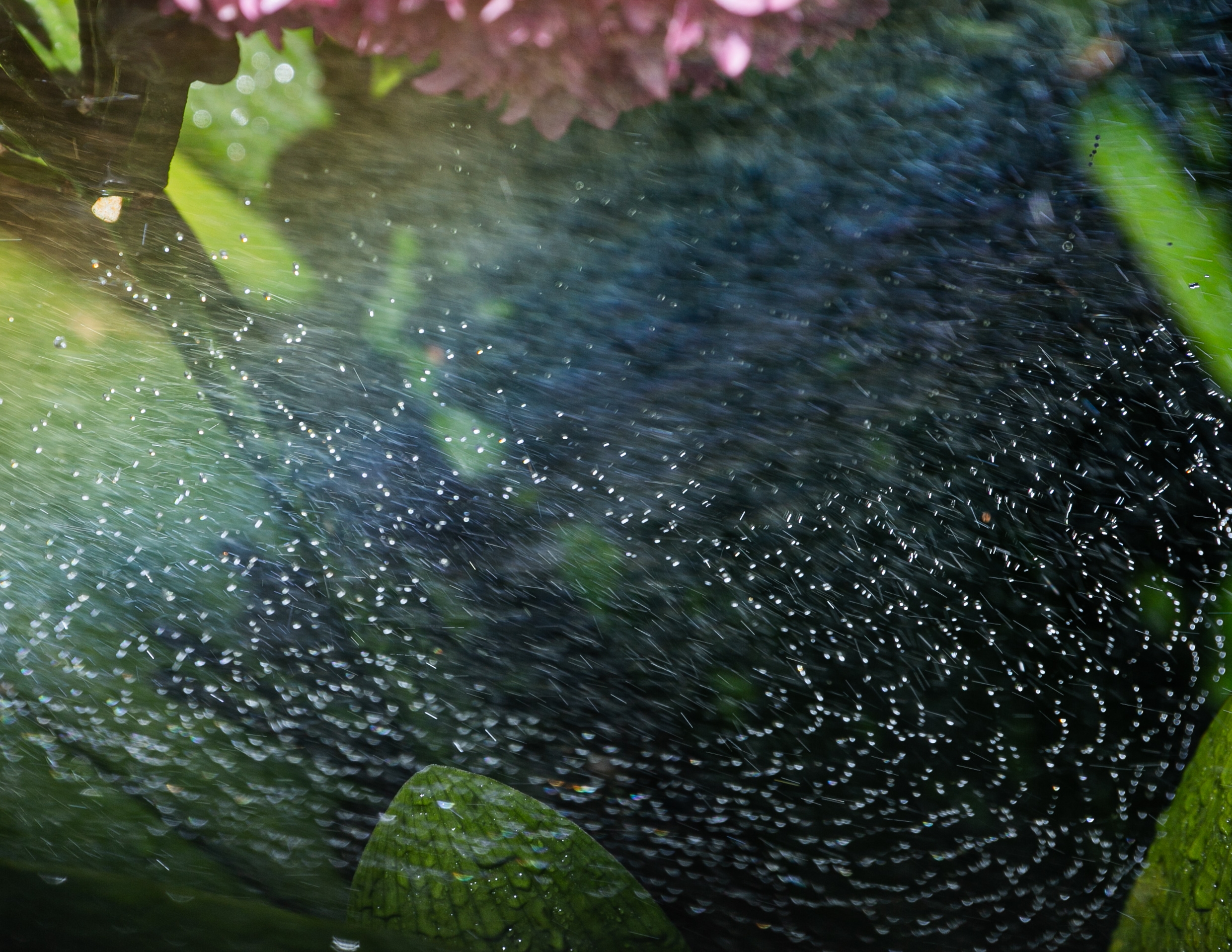
rain washes over
the last of our conversations
ellipses remain
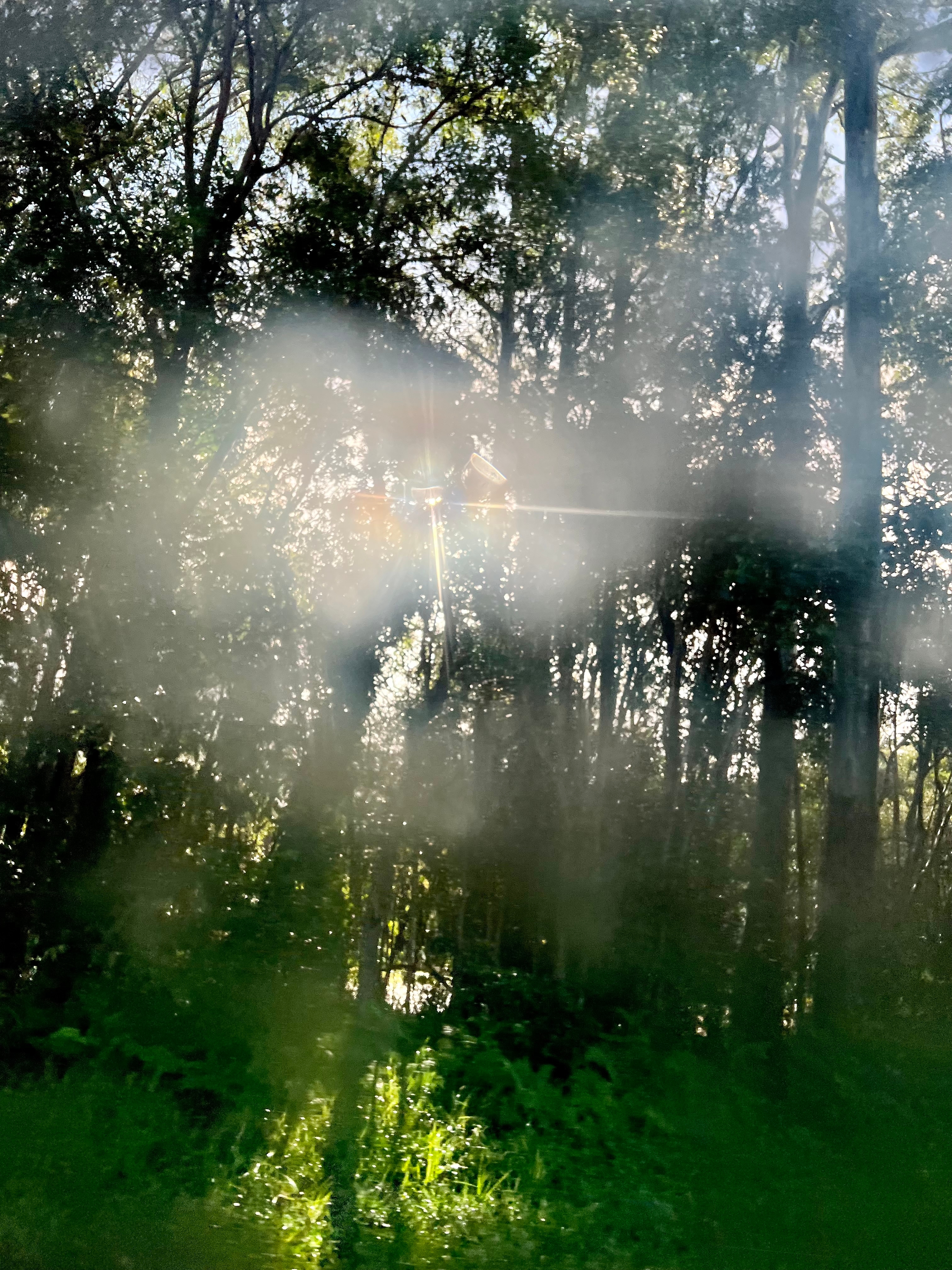
gingko walk —
the chatter
grows faint
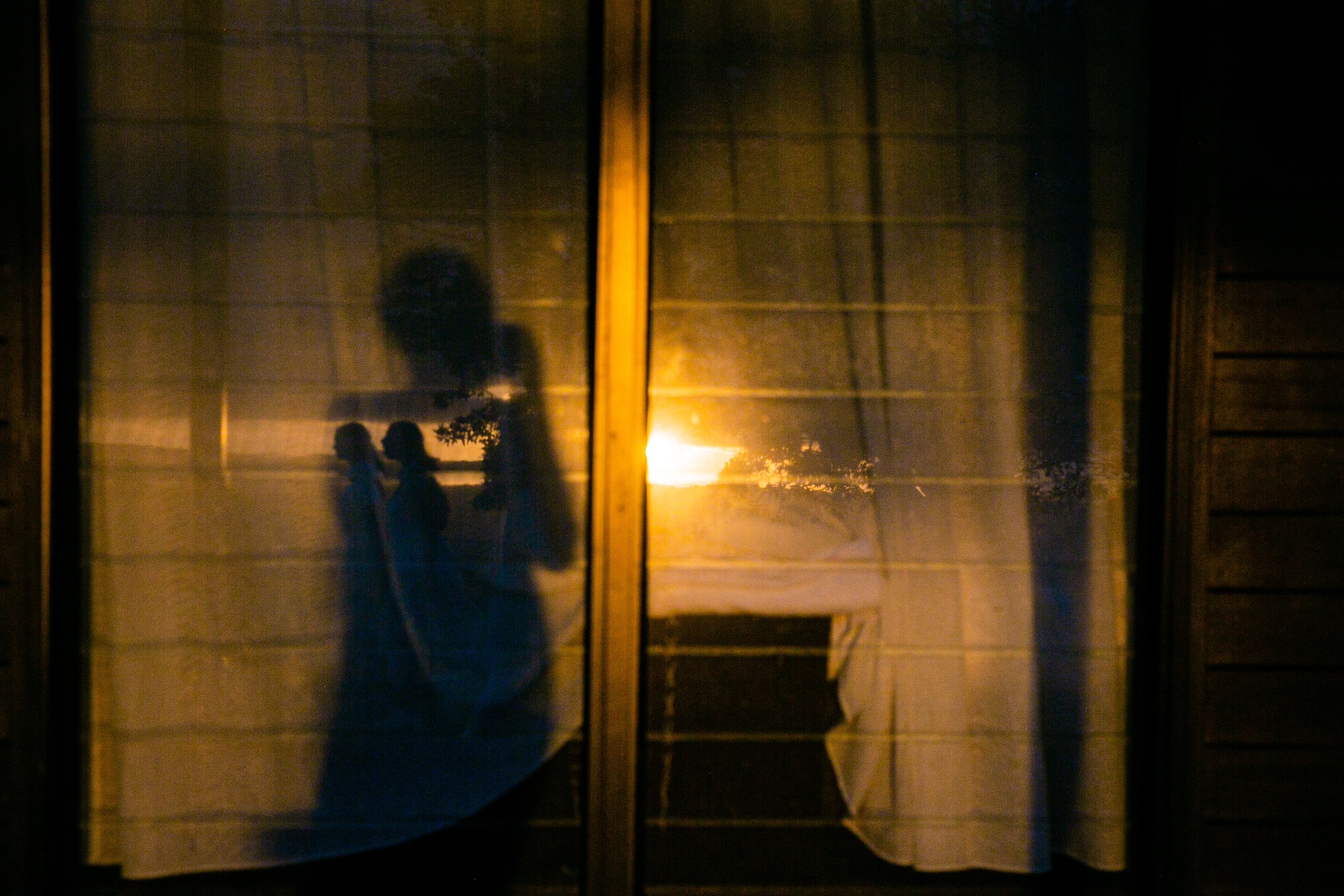
dusk notes…
holding close
what i leave behind
rain taps on glass…
a dance between
being and becoming

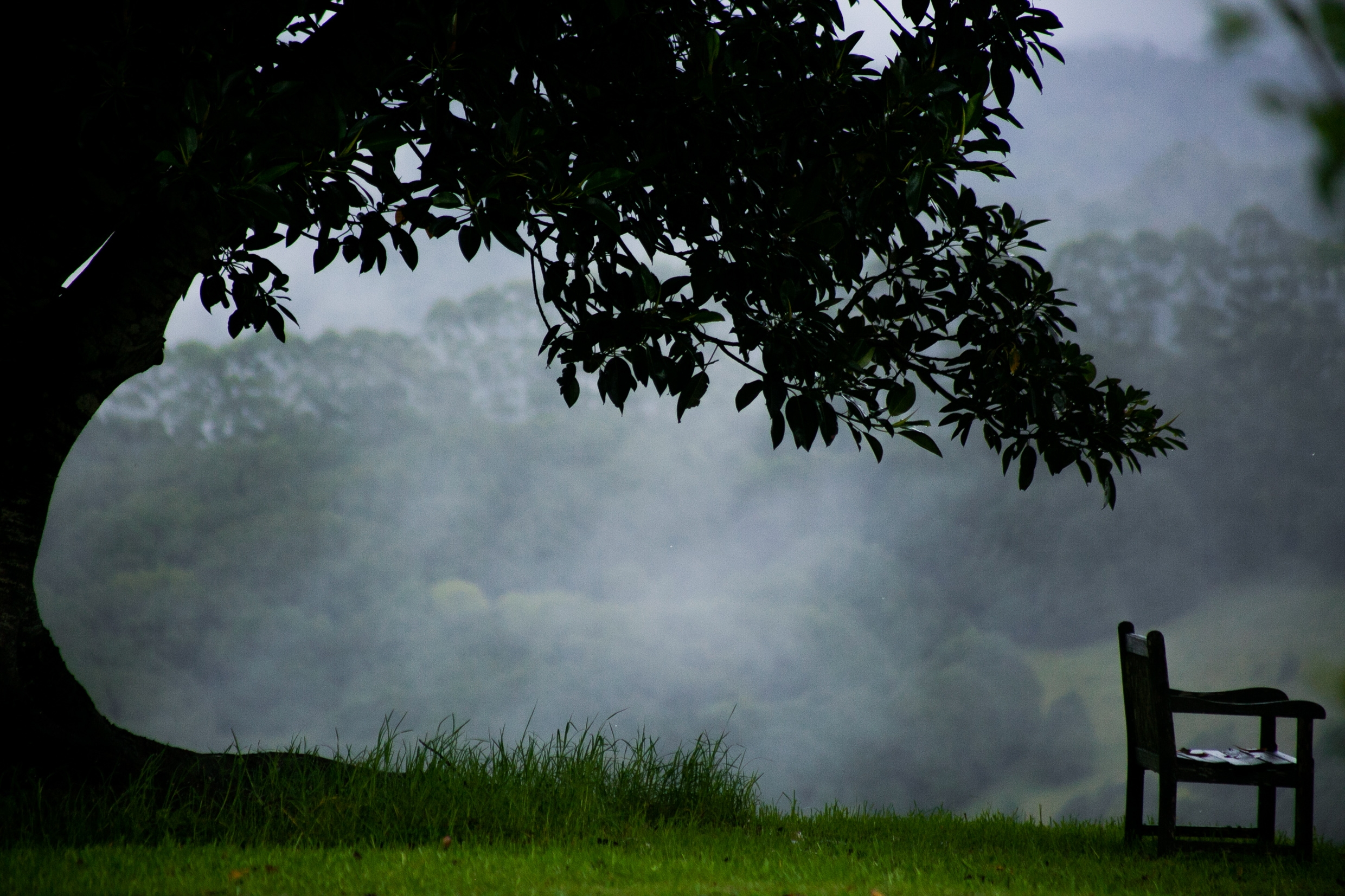
seasons turn…
still in the air
echoes of a song
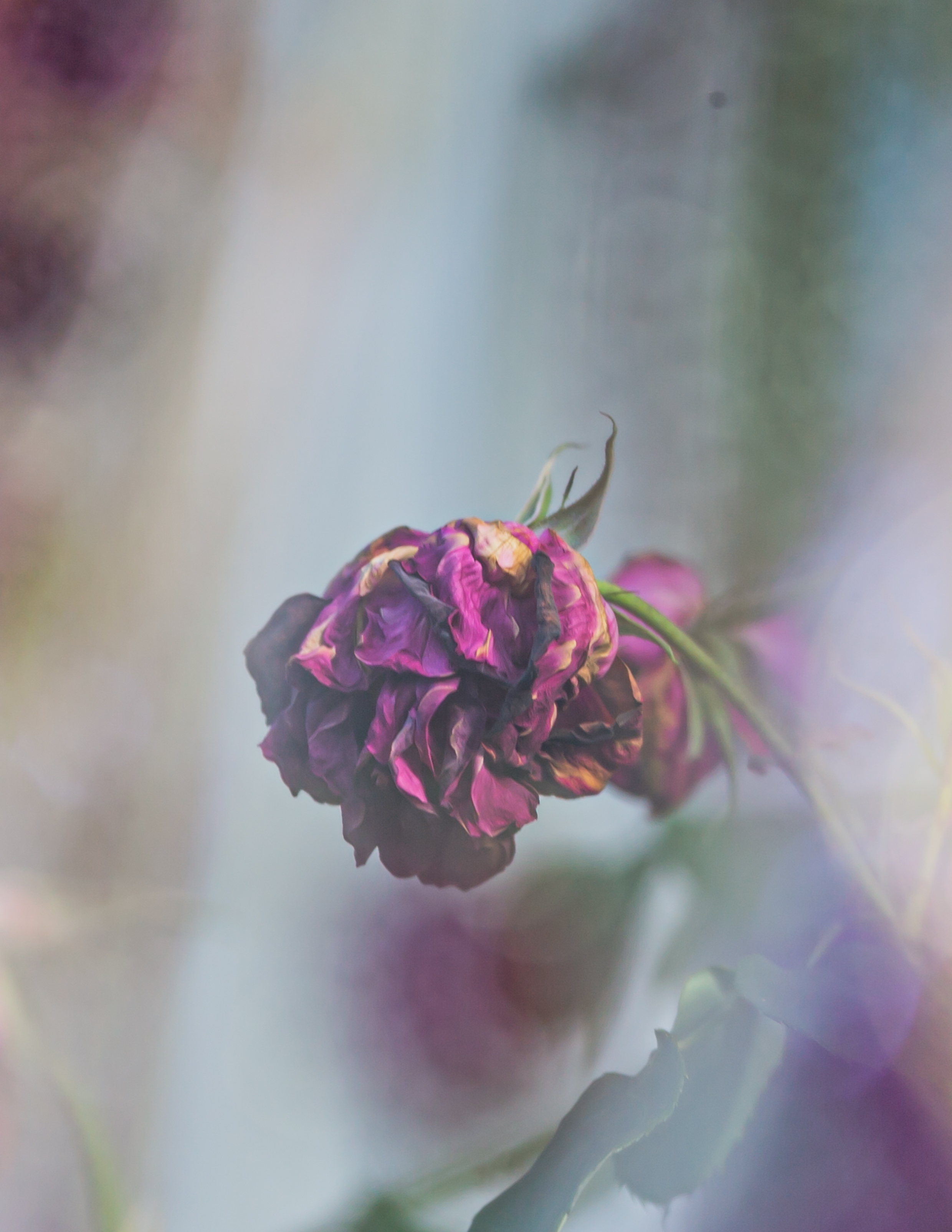
between bookends
the years
of our silence
the way of tears…
hearing a poem
from his eyes
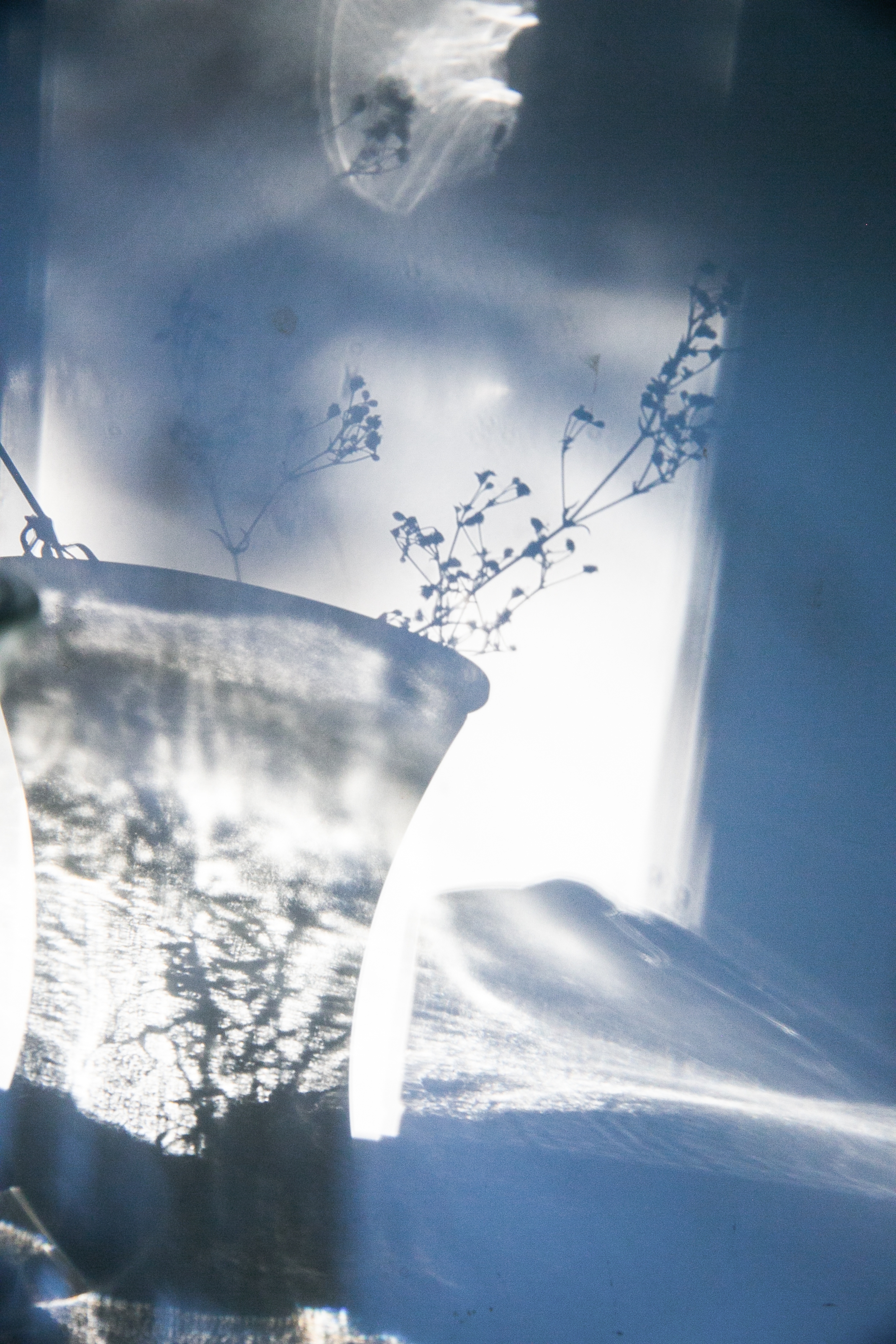
water mirror -
the changing subtext
of a promise


You may also like
Pause•Issue 10
Eyrie
BY Suprabha Seshan
Pause•Issue 10
Carrying Homes Within You
BY Radhika Iyengar
Pause•Issue 10
A Conversation Between a House and a Ghost
BY Pankaj Singh
Pause•Issue 9
The Room at The End of Life
BY Ashna Ashesh
Pause•Issue 9
Mountain Magic
BY Sangeetha Shinde Tee
Pause•Issue 9
Searching For Peace
BY Jackie Morris

Pause•Issue 8
A Sprig of Mint: Finding a Common Ground

Pause•Issue 9
The Long Way Home
BY Archana Srinivas